Blog >
Working Ethically >
Ethical Coaching in an Era of FTC Scrutiny: What Every Coach Should Know
Blog >
Working Ethically >
Ethical Coaching in an Era of FTC Scrutiny: What Every Coach Should Know
Ethical Coaching in an Era of FTC Scrutiny: What Every Coach Should Know
The coaching profession continues to grow at an extraordinary pace. Coaches are helping clients navigate career transitions, improve wellness habits, launch businesses, strengthen relationships, and create meaningful change in their lives.
At the same time, regulators are paying closer attention to deceptive marketing practices within the coaching industry.
Recent consumer alerts from the Federal Trade Commission (FTC) highlight a growing concern: some coaching programs have crossed the line from inspiration and education into exaggerated promises, misleading earnings claims, and high-pressure sales tactics. While many of these enforcement actions have focused on business coaching programs, the lessons apply equally to wellness coaches, life coaches, and other helping professionals.
For ethical coaches, these developments offer an opportunity to distinguish themselves through transparency, professionalism, and integrity.
The FTC Is Not Targeting Coaching
It is important to understand that the FTC is not targeting coaching as a profession.
Rather, the agency is targeting deceptive marketing practices that can occur in virtually any industry. Several recent cases involved companies that promised consumers they could quickly earn six-figure incomes or achieve extraordinary financial success through coaching programs that failed to deliver on those promises.
The message is straightforward:
If you make claims about results, you must be able to substantiate them.
The Problem with Promises
Many coaches enter the profession because they genuinely want to help people. Yet marketing language can sometimes drift into dangerous territory.
Examples include:
- "I can help you earn six figures in six months."
- "My system guarantees success."
- "You'll have your dream business by the end of this program."
- "My clients always achieve breakthrough results."
The challenge is that coaching outcomes depend on many variables beyond the coach's control, including a client's motivation, resources, life circumstances, timing, and willingness to implement recommendations.
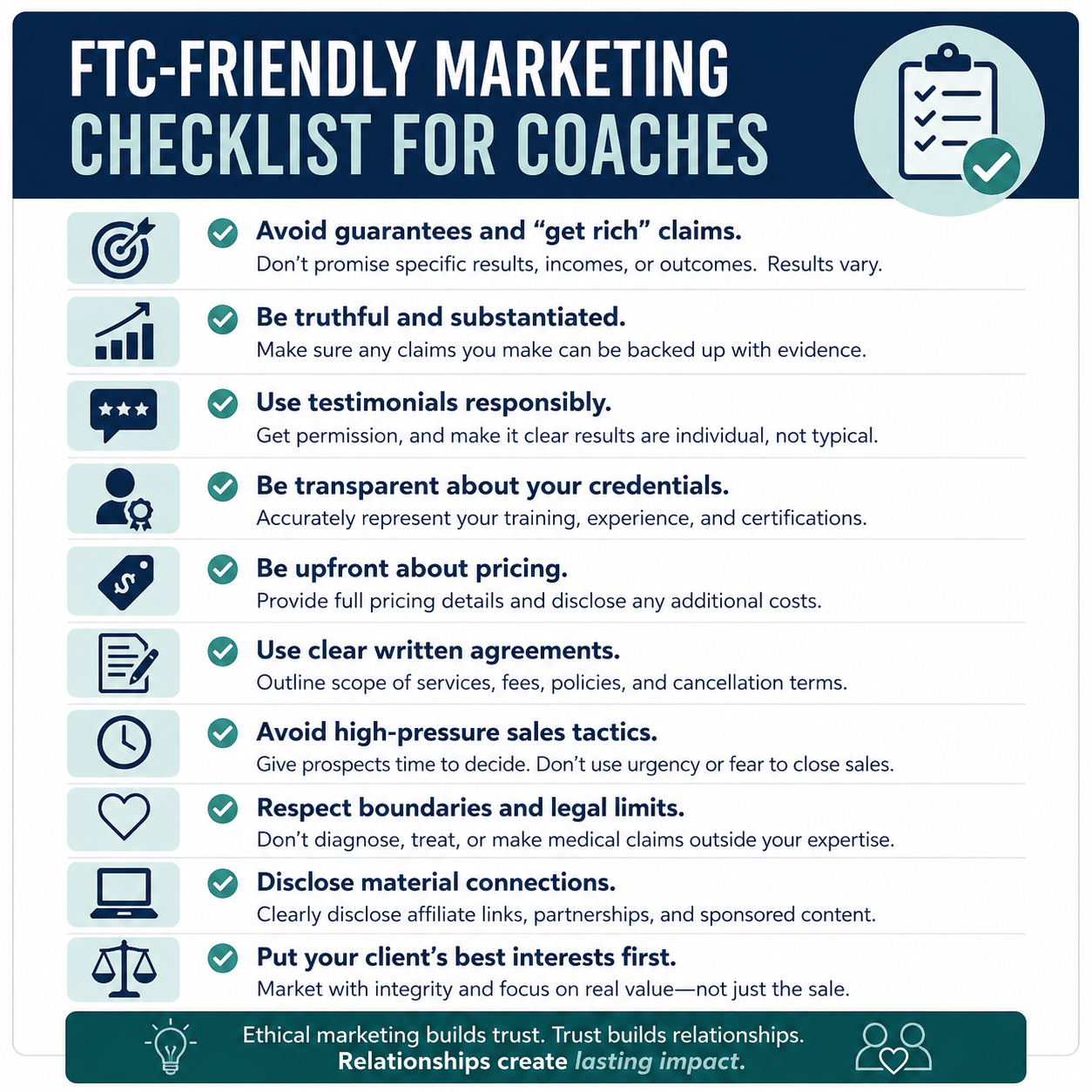
An ethical coach can describe their process, methodology, experience, and areas of expertise. What they cannot honestly promise is a specific outcome for every client. The FTC has repeatedly warned consumers about programs that rely on guarantees, extraordinary earnings claims, or "proven systems" that supposedly work for everyone.
Testimonials Are Not a Substitute for Evidence
Many coaches build credibility through testimonials and success stories. There is nothing inherently wrong with sharing client experiences.
The problem arises when exceptional outcomes are presented as typical outcomes.
A single client who doubled their revenue, lost significant weight, or transformed their life may have had a remarkable experience. However, ethical marketing requires making it clear that individual results vary.
When using testimonials, coaches should consider:
- Obtaining written permission.
- Avoiding exaggerated claims.
- Clarifying that results are individual.
- Refraining from presenting outliers as typical outcomes.
Transparency builds trust. Inflated success stories may build short-term sales but create long-term credibility problems.
Avoid High-Pressure Sales Tactics
One of the most consistent warning signs identified by consumer protection agencies is pressure.
Consumers should be cautious when they hear:
- "This offer expires tonight."
- "Only two spots remain."
- "If you don't act now, you'll miss your chance."
- "You must invest in yourself immediately."
Ethical coaches recognize that informed decisions require time and reflection. They allow prospective clients to review agreements, ask questions, and determine whether the coaching relationship is a good fit. The FTC specifically advises consumers to slow down, seek second opinions, and avoid making decisions under pressure.
Written Agreements Matter
Whether you are a life coach, wellness coach, executive coach, or business coach, a written coaching agreement is one of the strongest indicators of professionalism.
A quality agreement typically outlines:
- Scope of services
- Fees and payment terms
- Cancellation policies
- Confidentiality limitations
- Client responsibilities
- Coach responsibilities
- Expected outcomes and limitations
Clear agreements protect both the client and the coach.
Wellness Coaches Face Similar Risks
Although many FTC actions have focused on business coaching, wellness coaches should pay equal attention.
Claims such as:
- "This program will heal your condition."
- "You'll lose 30 pounds in 30 days."
- "My method reverses chronic illness."
can create significant legal and ethical concerns.
Coaching is not medicine. Wellness coaching can support behavior change, lifestyle modification, accountability, and personal growth, but coaches should be careful not to make promises that belong within the realm of healthcare, diagnosis, or treatment.
Building a Reputation That Lasts
Ironically, the coaches most likely to build sustainable careers are often the ones making the fewest promises.
Instead of selling certainty, they sell a process.
Instead of guaranteeing outcomes, they offer guidance.
Instead of creating urgency, they create trust.
The coaching profession thrives when clients understand what coaching can—and cannot—provide. Ethical marketing is not simply about avoiding regulatory scrutiny. It is about honoring the relationship at the heart of coaching itself.
As the FTC continues to scrutinize deceptive coaching practices, ethical coaches have an opportunity to lead by example: clear agreements, realistic expectations, transparent marketing, and a commitment to helping clients make informed decisions. That approach may not produce the flashiest social media advertisements, but it is far more likely to produce something better- a professional reputation built to last.
This article is not a substitute for legal advice.
References
Federal Trade Commission (FTC) https://consumer.ftc.gov/
New Hampshire Department of Justice https://www.doj.nh.gov/news-and-media/consumer-alert-life-coaching-scams-warning